
Faster, more responsible decisions. LIVE BOARD and NTT DOCOMO's challenge to streamline DOOH ad review operations with AI.
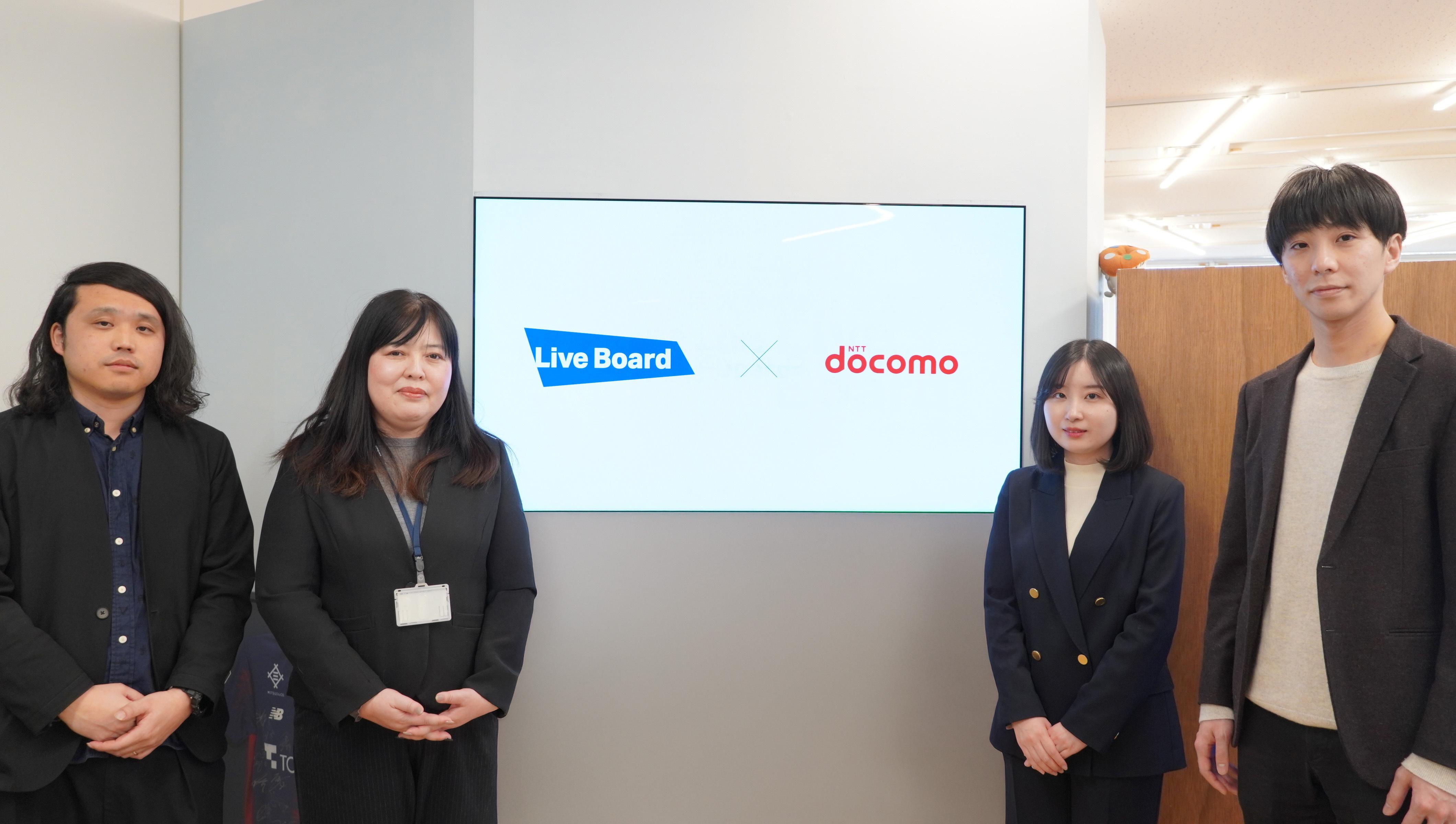
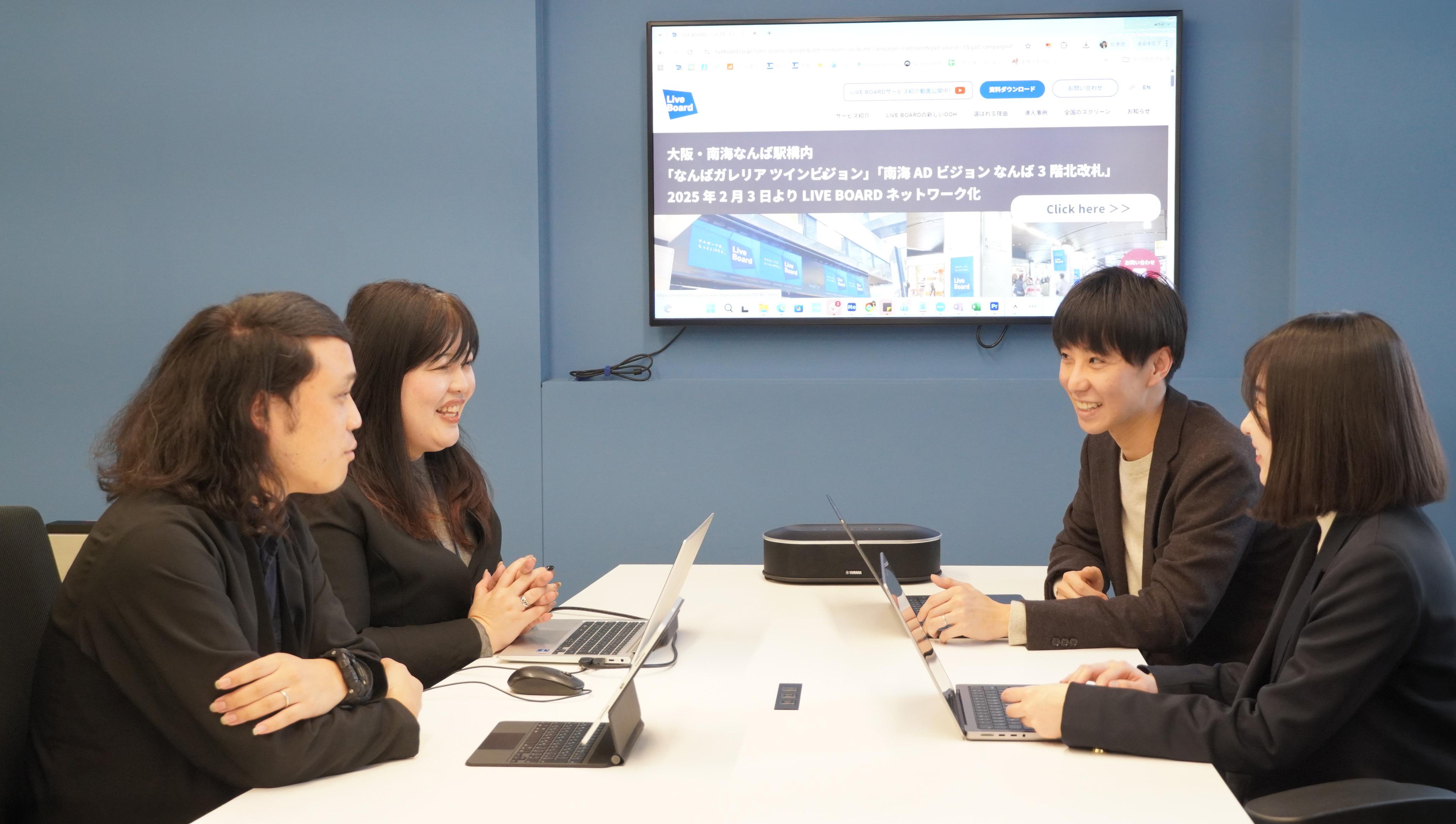
(From left in photo) LIVE BOARD Media Department, Koki Sato; LIVE BOARD Media Department, Review Officer, Yumi Hatakeyama
NTT DOCOMO X-Tech Development Department, Arisa Sekine; NTT DOCOMO X-Tech Development Department, Hayato Kumagai
The use of AI in business settings has been expanding in recent years, and its adoption is now gaining momentum in the OOH (Out-of-Home) industry as well. Particular attention is being paid to the efficiency gains AI brings to advertising review processes.
LIVE BOARD, INC. has jointly developed AI technology with NTT DOCOMO, INC. specifically for vetting advertisers on its digital OOH※1 (hereinafter DOOH) platform. By applying AI to the vetting process--previously handled by specialists with specific expertise--the companies have built a system capable of making initial determinations within minutes based on the latest corporate information. This is expected to improve operational efficiency by over 30%.
In this interview, we spoke with the development members of LIVE BOARD and NTT DOCOMO about the background of the development, the technical challenges, and the new possibilities for AI-powered ad review.
Interlocutor
LIVE BOARD Media Department, Koki Sato
LIVE BOARD Media Department, Review Officer, Yumi Hatakeyama
NTT DOCOMO X-Tech Development Department, Arisa Sekine
NTT DOCOMO X-Tech Development Department, Hayato Kumagai
Responsibility and Expertise Required for Advertiser Review
- To begin with, what exactly is DOOH advertising review? It might be difficult to visualize in general. What does DOOH review entail?
LIVE BOARD Sato (hereinafter "LB Sato"): Advertising reviews for DOOH broadly fall into two categories: "Advertiser Reviews" and "Design Reviews (content reviews of advertising materials to be broadcast)." Since DOOH is a medium with forced visibility and high public relevance, its review standards are extremely strict. At LIVE BOARD, based on our proprietary guidelines, advertiser screening verifies the credibility of companies and products, while design screening confirms compliance with laws, broadcasting ethics, and the impact on viewers. Currently, the information gathering and guideline verification processes required for these screenings are meticulously handled one by one by specialists with the necessary expertise.
- This time, you developed AI specifically for advertiser screening. What challenges did the previous "advertiser screening" process face?
LIVE BOARD Hatakeyama (hereafter "LB Hatakeyama"): The screening process required advanced judgment and expertise, making it a time-consuming task. Specifically, we comprehensively assess whether companies meet the "social credibility" criteria by reviewing their official websites and publicly available online information to understand their business and product overviews, and checking for compliance with the latest laws and regulations. This process also incorporates consideration of the prevailing social climate at the time, including the perspective of whether the advertising might cause discomfort to those who see it.
Given the public nature of DOOH broadcasts, careful judgment is essential. Reaching accurate conclusions requires multifaceted research, inevitably taking a certain amount of time. Furthermore, decisions must consider industry-specific review criteria, regional regulations, and societal perceptions. This necessitates legal knowledge, media-specific expertise, and broad social understanding. Such knowledge and experience tended to accumulate with individual staff members, making it difficult to institutionalize within the organization. We recognize this as a challenge not unique to LIVE BOARD, but common across the entire DOOH industry.
- This is a highly specialized task requiring meticulous investigation, with significant responsibility and expertise. Furthermore, LIVE BOARD is a programmatic DOOH (pDOOH) platform comprising a network of over 60,000 screens nationwide. Are there unique challenges in the review process specific to pDOOH?
LB Hatakeyama: Speed is indeed the key factor. LIVE BOARD is often utilized as an extension of digital advertising, and it's not uncommon for clients to demand review results with the same sense of urgency as digital media.
In the DOOH industry, it's typical for review responses to take several business days, but same-day responses are sometimes required. The traditional manual review process inevitably takes time, making it a major challenge to meet the demands of operations that require speed.
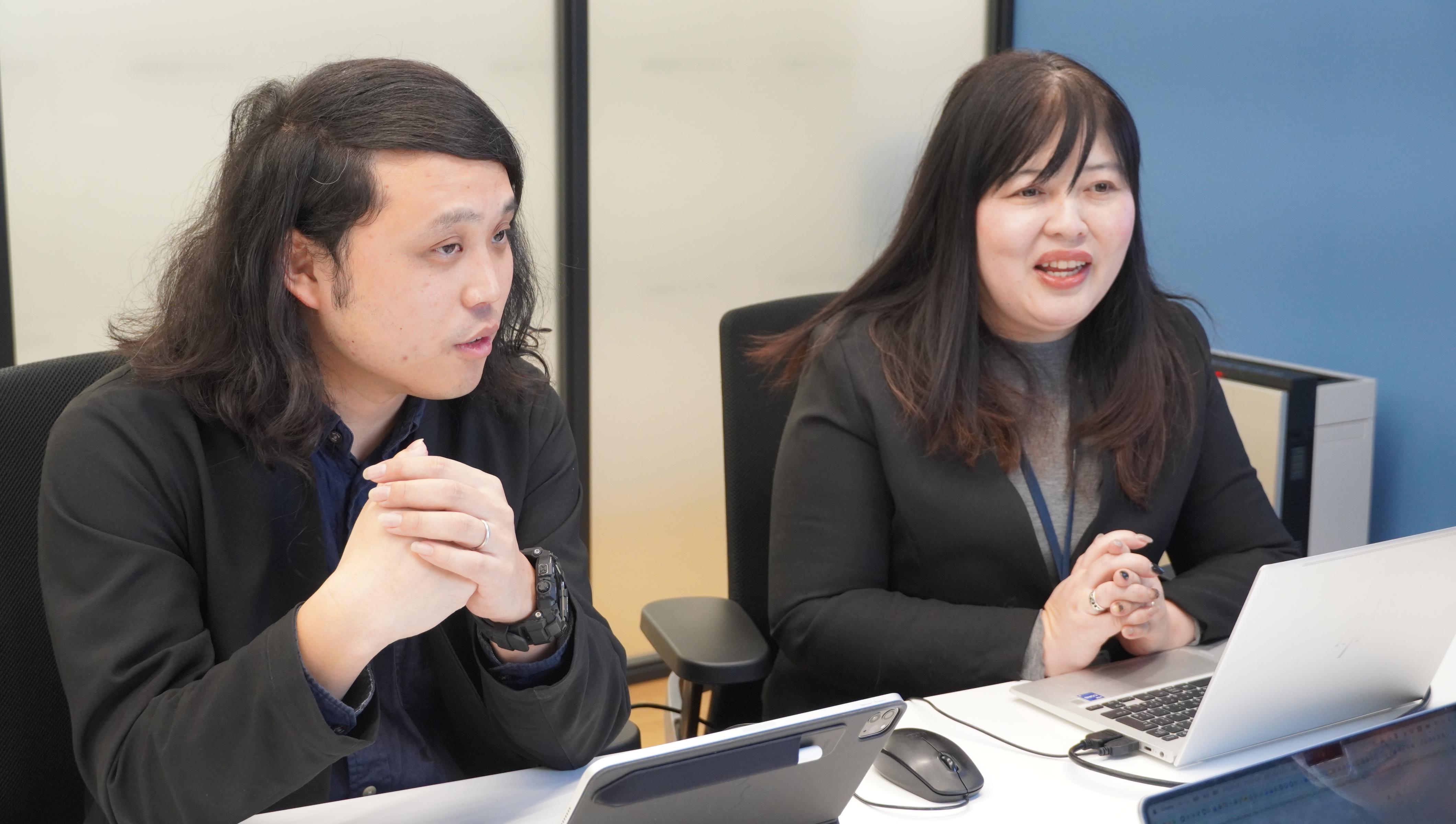
(From left in the photo) LIVE BOARD Sato, LIVE BOARD Hatakeyama
AI technology for advertiser screening that balances speed and accuracy
- What led to the development of AI technology for screening?
NTT DOCOMO Kumagai: To date, we have worked on LIVE BOARD, focusing on impression calculation and developing technologies and solutions that utilize DOCOMO's location information and other capabilities. At DOCOMO, we are not only working on DOOH but also striving to enhance the efficiency and optimization of advertising as a whole, including the web, and are actively promoting the development of various advertising technologies.
Upon learning about the challenges in DOOH content review, I felt that developing AI review technology presents an opportunity to leverage NTT DOCOMO's diverse technologies, and I am eager to collaborate.
- So the direction of Docomo's advertising technology business aligned with the challenges identified by LIVE BOARD. Then, how was the development of the "review AI technology" carried out, and what kind of mechanism was built to produce the resulting outputs?
NTT DOCOMO Sekine: Before starting development, we began by conducting detailed interviews with LIVE BOARD to understand their practical review workflow and specific bottlenecks, thereby clarifying the challenges. As Mr. Hatakeyama mentioned earlier, the previous advertiser review process involved manually checking vast amounts of information one by one from various perspectives. We focused on creating an efficient system that could effectively solve these issues and be user-friendly.
Specifically, when you enter a company name, product, or official URL into the app, it displays investigation results within about two minutes based on criteria such as "Company Overview," "Compliance Status," and "Social Reputation." Based on this information, you can simultaneously confirm the posting approval status (Approved, Requires Secondary Review, Not Approved) and the reasons for that decision.
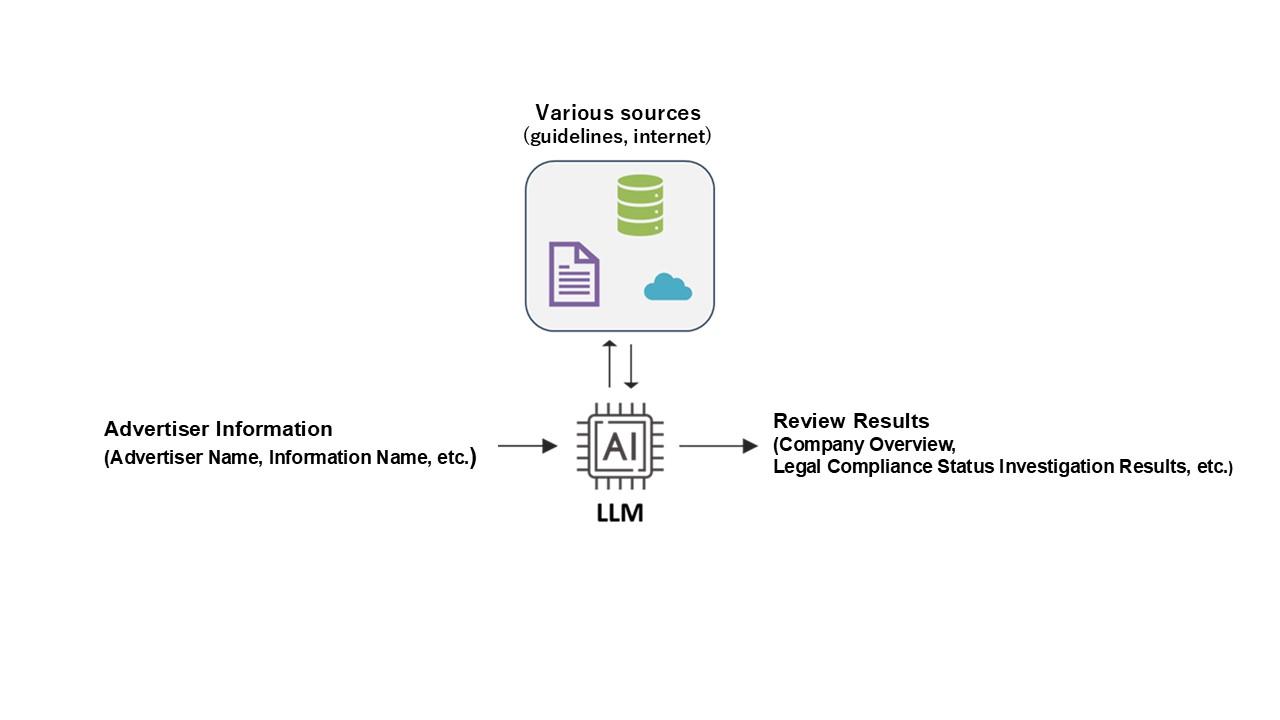
Figure 1. Conceptual Diagram of Technology Application
Upon reviewing the sample, I was impressed by the report's detail and accuracy. Were there any particular areas you focused on during development, or any special approaches you took?
NTT DOCOMO Kumagai: Our top priority was the accuracy and timeliness of information. For example, if there is a past record regarding compliance status, we ensure it can be tracked chronologically--what measures were taken, when, and how the company responded afterward. In today's rapidly changing social climate and evolving facts, we believe obtaining the most current information at the time of review is crucial for ensuring sound judgment.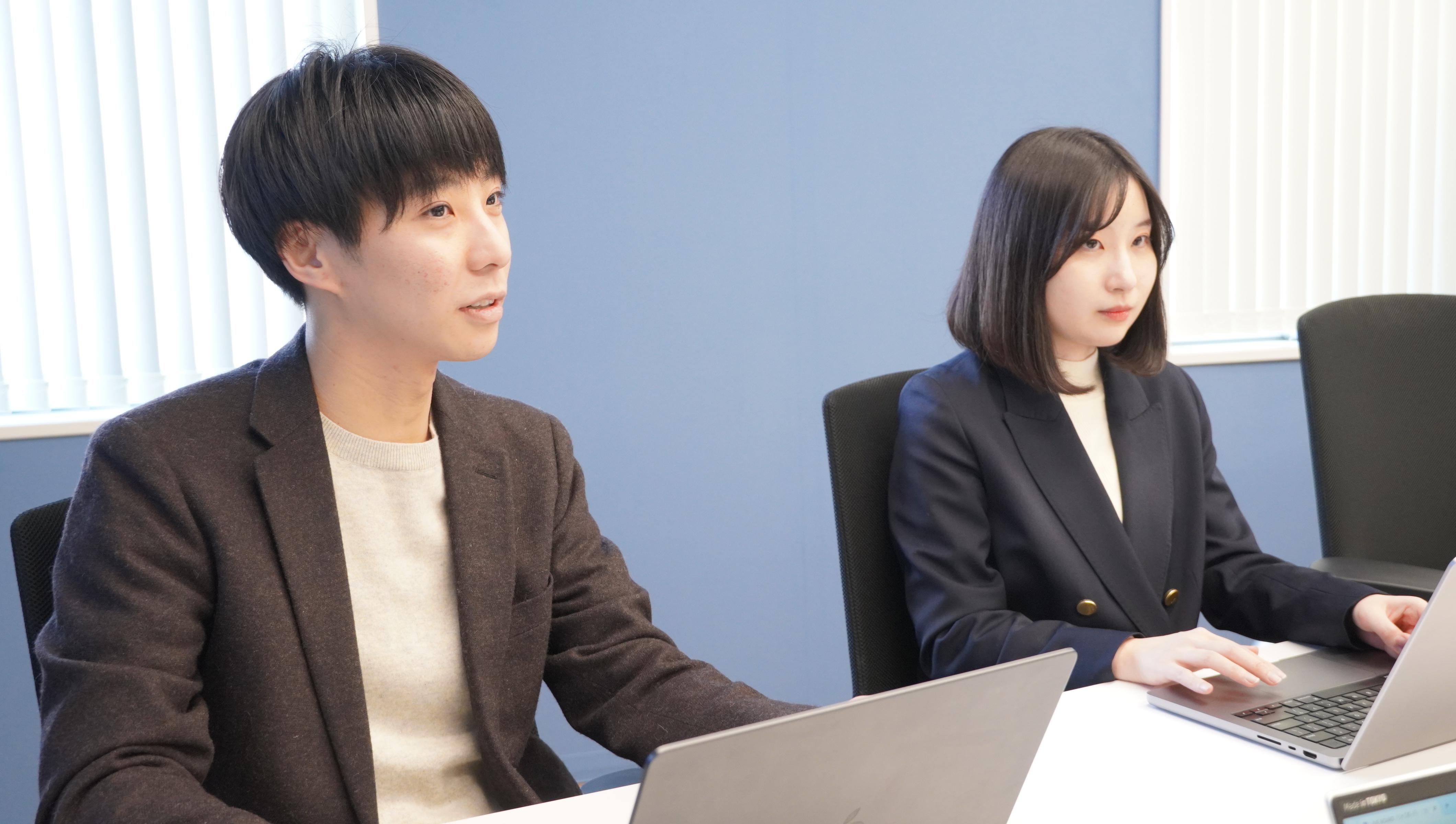
(From left in the photo) NTT DOCOMO Kumagai, NTT DOCOMO Sekine
NTT DOCOMO Sekine: During initial development, we struggled to achieve our goal of "outputting exactly the necessary information without excess or omission." To overcome this challenge, we introduced "web search-based grounding technology*2." This enabled us to obtain the latest detailed information and establish the accuracy of evidence in our response results. Additionally, incorporating actual review procedures into the algorithm was another key innovation. To collect information using the same criteria as human reviewers, we reflected "search terms" and other elements actually used in the field within the program.
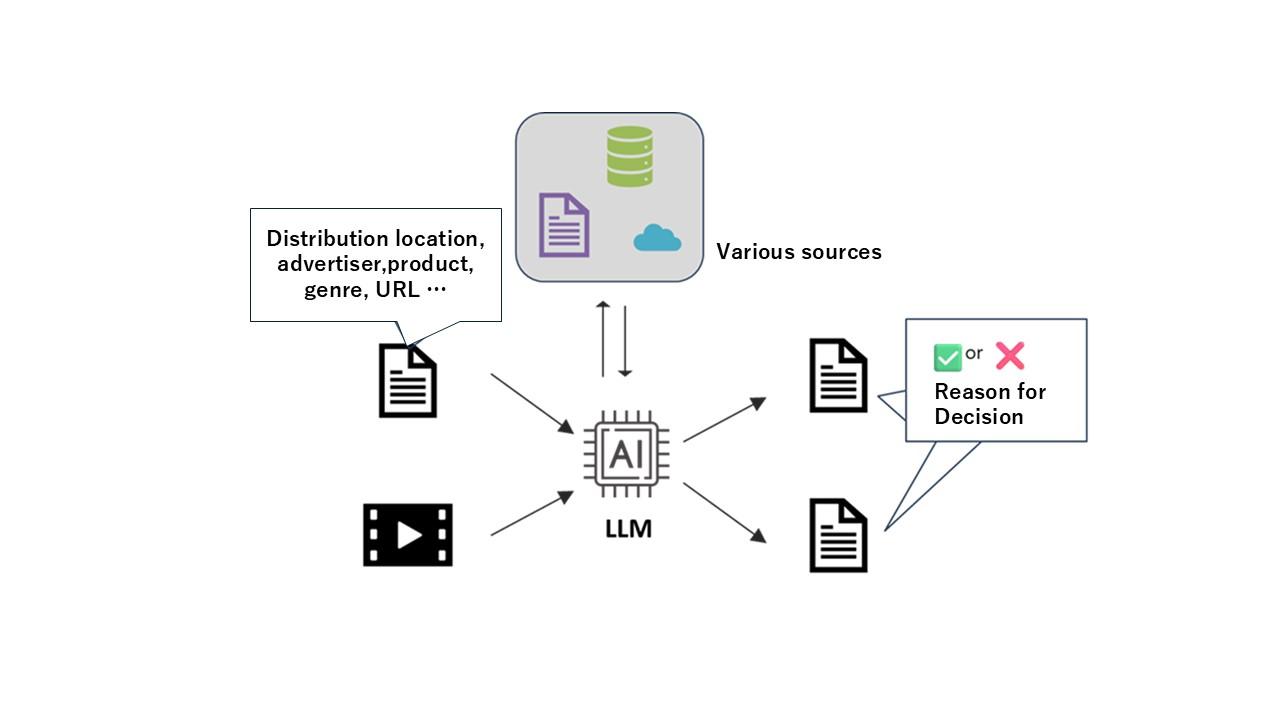
Figure 2. Detailed Concept of Mechanism and Technology
LB Hatakeyama: After reviewing the sample judgment results, I felt they aligned with the information volume and decision criteria we typically use in our reviews. In today's fast-paced environment, being able to verify information at just the right level of granularity is extremely reassuring. In actual operation, reviewers will provide LIVE BOARD responses based on the AI's output. While humans make the final judgment, we expect this to streamline over 30% of our workflow by significantly reducing the effort required for investigations.
LB Sato: While "AI-powered screening" is an area where companies in the advertising industry are actively advancing their efforts, a major feature of LIVE BOARD's screening AI is its ability to provide risk indications based on the latest information at all times by incorporating "web search-based grounding technology."
Additionally, since the DOOH we operate is a network-based media, screening is required based not only on our internal guidelines and regulations but also on the differing preferences and judgment criteria of each building owner for each screen location.
In this development, we have built a system that takes these characteristics into account, inputs the different owners' preferences and screening criteria for each building where the Vision is installed, and presents individual judgments for each Vision unit.
We believe that the very design, informed by LIVE BOARD's unique business characteristics as a DOOH network operator, is a major strength in this AI development project.
Through this AI technology, we can deliver "responsible decisions" quickly while maintaining expertise. This directly translates to faster response times for advertisers. We also see significant value in establishing a system that ensures business opportunities are not missed.
What's Next After AI Technology for Advertiser Screening? The Challenge of AI Technology for Design Examination
- So the development of AI technology for advertiser screening was the result of meticulous efforts closely aligned with the field. Can we expect AI technology development for design screening in the future as well?
LB Sato: We definitely want to make this happen. Compared to advertiser reviews, design reviews involve a significantly larger volume of work. Due to the nature of pDOOH, advertising materials are primarily video-based, and the sheer number of assets is enormous. Furthermore, when content is tailored by region or moment (time or situation), the verification workload increases exponentially, making the hurdle for efficiency even higher.
LB Hatakeyama: The review process is extremely detailed. While we have guidelines, there are cases requiring subjective judgment, such as the impression conveyed to viewers. For cases where opinions differ, we carefully review them with multiple people. It seems difficult to completely replace everything with AI.
However, we want to streamline tasks that don't require visual inspection using AI. By incorporating AI's quantitative assessments, we can clarify the basis for determining whether something is "OK or not." AI could also support verifying that revised materials are correctly reflected. This way, we aim to reduce the human workload while achieving both higher review accuracy and faster turnaround times.
NTT DOCOMO Kumagai: Video materials contain orders of magnitude more information than text data, so the difficulty increases. However, AI has its strengths. For items with quantifiable criteria, computers can process them faster than humans, so I believe there is significant potential to utilize AI in design review as well. Going forward, we plan to work with LIVE BOARD to prioritize efforts while carefully assessing cost performance and time performance gains through efficiency improvements.
LIVE BOARD × DOCOMO: Future Prospects in AI Technology Development
- Hearing your account so far, I get the impression that development has progressed with a very close sense of mutual trust, transcending corporate boundaries. Could you share your outlook for future AI technology development?
LB Hatakeyama: Within the highly specialized and intricate field of developing AI technology for DOOH ad review, I even made some unreasonable requests like, "It would be so helpful if you could do this!" (laughs). Even so, they listened carefully to my needs and delivered outputs through trial and error, which was incredibly reassuring. Moving forward, we're entering the phase of "nurturing" this AI, so I look forward to deepening our collaboration.
NTT DOCOMO Kumagai: In AI technology development, you can't get started without the data to train it. We worked with LIVE BOARD repeatedly to refine the details--what's needed for screening, what "screening" actually entails--and shape it into a concrete form. It's not just about developing it and calling it done. We aim to improve any areas that are difficult to use, including not only the AI's accuracy but also the app's UI, so that more people can utilize it effectively.
LB Sato: LIVE BOARD contains a wealth of insights accumulated through our past operations. Going forward, integrating review AI into this foundation should make our organization even stronger.
By combining NTT DOCOMO's advanced technological capabilities with LIVE BOARD's practical expertise accumulated on the front lines, we believe we can take on unprecedented initiatives that leverage the strengths of both companies. Ultimately, if this review AI can be utilized by other media companies as well, it should lead to a reduction in the burden across the entire industry. We want to continue challenging ourselves at the forefront, not just as LIVE BOARD, but with an eye toward the development of the entire industry.
※1 Abbreviation for Digital Out of Home. Advertising media utilizing digital signage installed in transit advertising, outdoor advertising, commercial facilities, etc.
※2 This refers to the technology whereby AI generates responses not only based on pre-trained data but also by searching and referencing the latest web information in real time, constructing answers based on that evidence. This dramatically improves the accuracy and freshness of the information.
Interviewer
Hirotaka Mano, Marketing Director, Insight Department, LIVE BOARD, INC.

After joining DENTSU, I spent nine years at the Chubu Branch Office gaining experience in planning within the promotion/marketing domain before transferring to the Out-of-Home Media Division. There, I was involved in developing marketing/sales strategies for LIVE BOARD, as well as advancing DOOH planning and effectiveness verification centered on "people." I am currently seconded to the LIVE BOARD Insights Department.
(Text:Aoi Mitani)
