
New Possibilities for Teen Communication DOOH: The Third Option That Goes Beyond "Reaching Your Audience"
Why Is Communicating with Teens So Difficult "Right Now"?
"We want to reach teenagers with our ads. But it's getting harder to do so every year."
This sentiment is becoming increasingly common among advertisers and agencies.
In the past, reaching teenagers was a relatively simple process: apply age-based targeting on social media, segment by interests, and deliver ads through content. However, since 2024, this "norm" has been rapidly changing.
"Voluntary measures" taken by platforms are becoming more widespread.
From the perspective of privacy protection, various platforms are adopting a cautious approach to serving ads to minors. LINE and Yahoo! have imposed certain restrictions on age-based and behavioral targeting, and TikTok has also strengthened its guidelines for protecting minors.
This is a socially significant development aimed at safeguarding children's digital environment, and a similar trend is spreading globally. In Australia and Western countries, there are also moves to impose restrictions on minors' use of social media itself, and the digital advertising landscape is steadily changing.
And there is also a "psychological barrier."
In today's world, where timelines are flooded with all kinds of information, a behavioral phenomenon known as "timeline noise cancellation*1"--in which consumers unconsciously filter out one-sided advertisements from companies--is becoming widespread. Among them, teenagers who have grown up surrounded by smartphones and video content since childhood exhibit this tendency to ignore ads in an extremely natural and powerful way. The tendency to ignore ads--such as unconsciously scrolling past or skipping them the moment they appear--is growing stronger. Their mental filters tend to perceive ads that hold little interest or relevance as "noise," causing them to unconsciously skip over them.
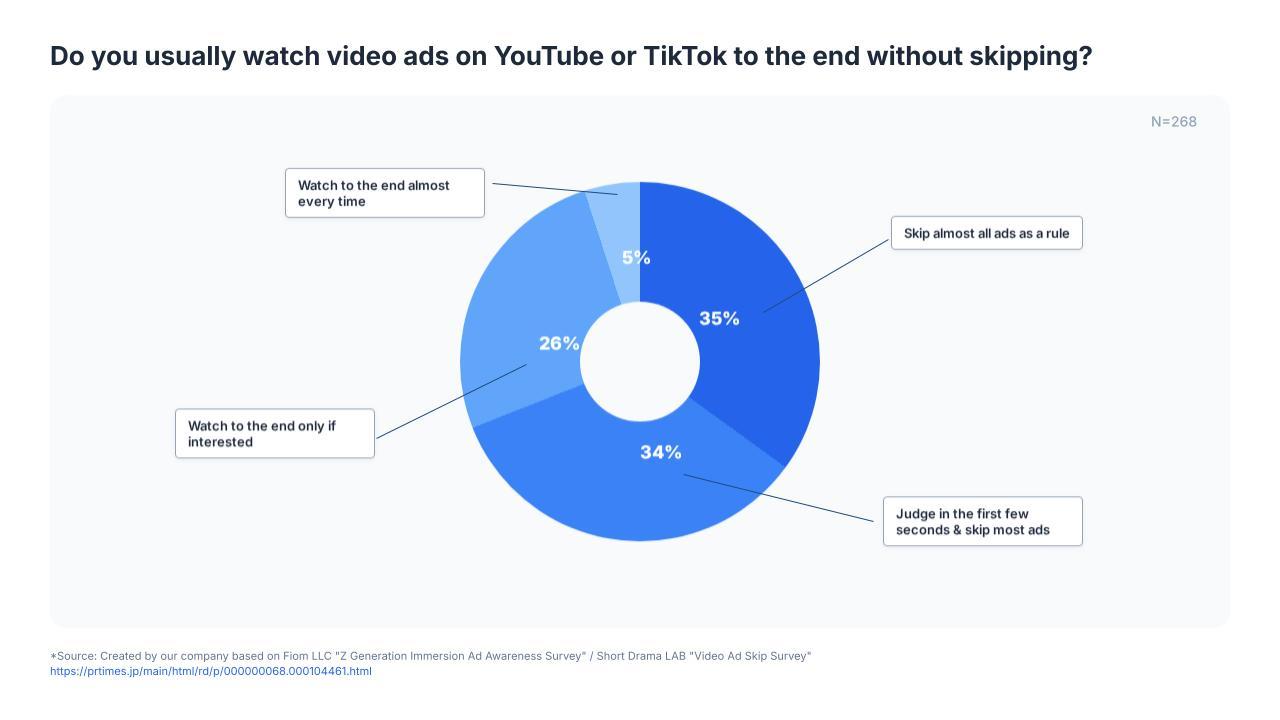
In fact, a survey on advertising attitudes targeting young people in Japan (Generation Z) revealed that a staggering 70% (69.0%) of respondents said they "immediately skip" video ads the moment they appear.
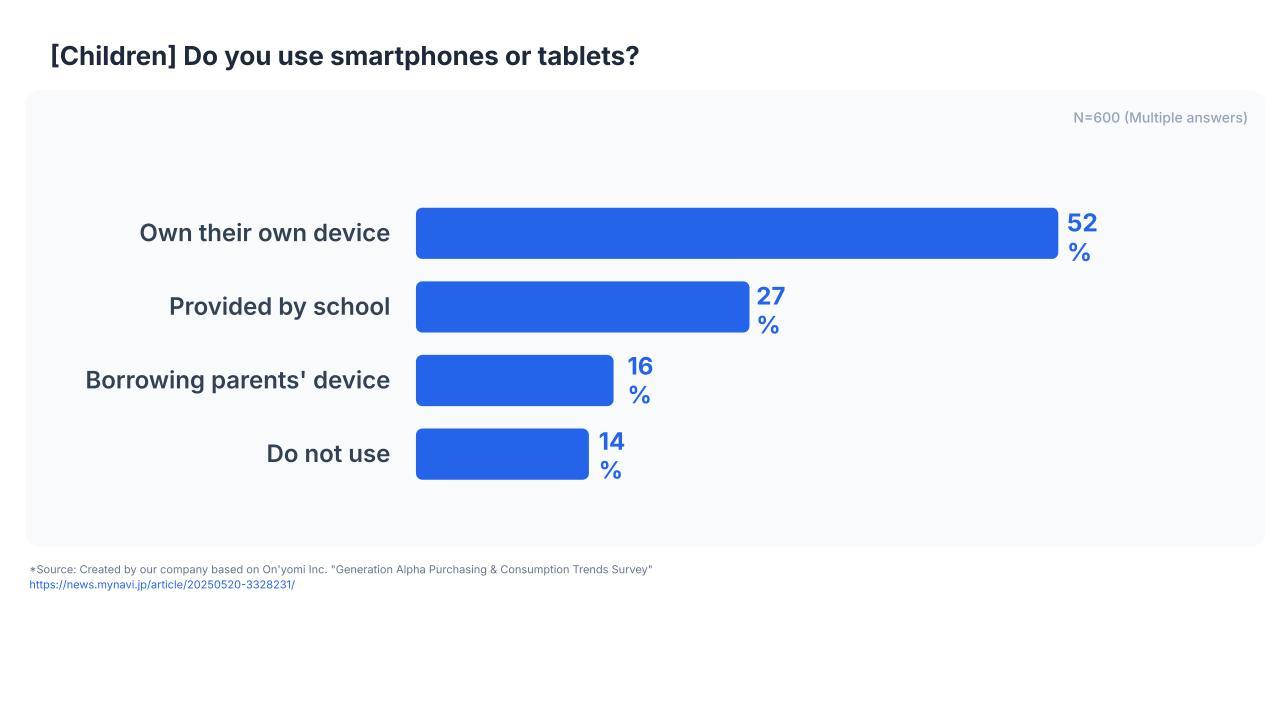
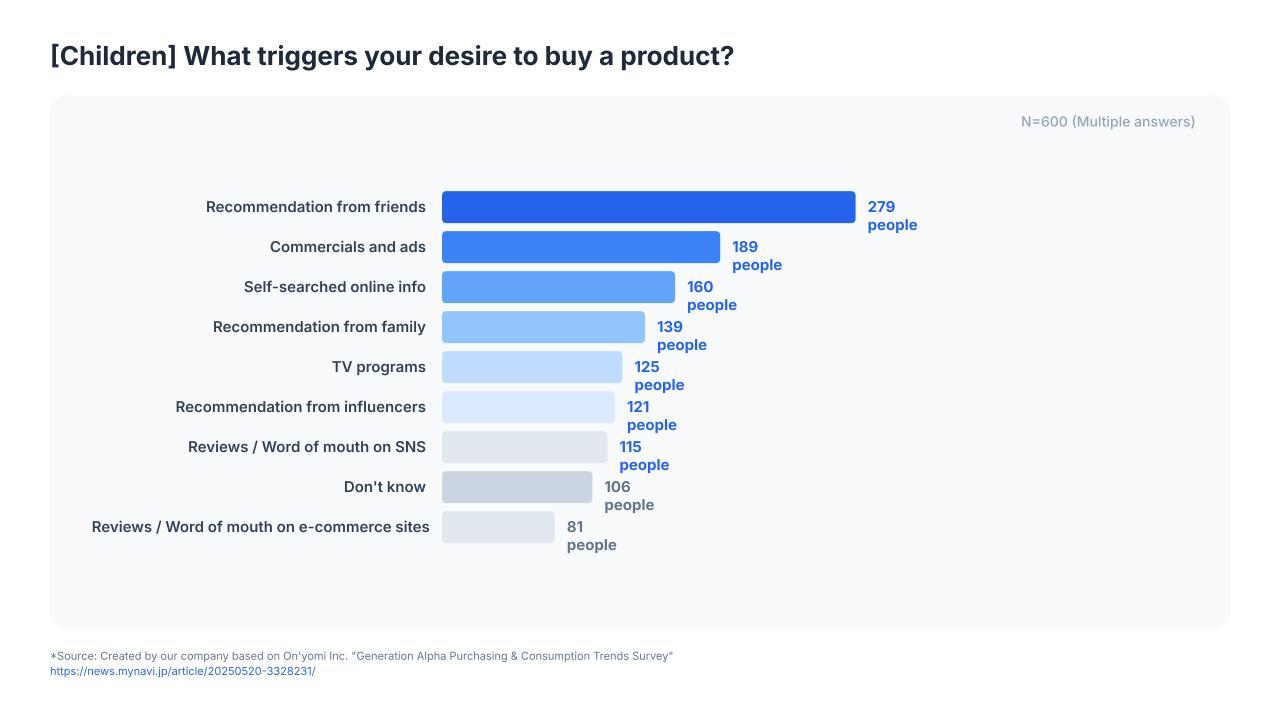
Furthermore, according to recent domestic surveys, today's youth and the younger Alpha Generation are "digital natives" who have been adept at using dedicated devices since early childhood. A survey on smartphone and tablet usage among the Alpha Generation found that "more than 50 percent" own their own smartphones or tablets. While they tend to ignore (skip) one-way digital ads distributed by companies, they proactively seek out product information by making full use of "recommendations from friends" and "word-of-mouth on social media," and engage in purchasing behavior that involves their parents.
Overall, there are an increasing number of situations where traditional digital targeting alone is proving insufficient for reaching teenagers, and this trend is likely to continue.
Why We Must Still Reach Out to Teens
On the other hand, just because targeting has become more difficult doesn't mean we can stop advertising to teenagers.
This is because teenagers are both today's customers and the tomorrow's market.
The purchasing influence wielded by Gen Z and Gen Alpha extends beyond individual consumption. It is said that they play a role in the purchasing decisions of their parents--the generation that holds the household purse strings. For example, it is not uncommon for items that teenagers find appealing on social media or YouTube--such as smartphones, video games, beverages, and travel destinations--to directly lead to household purchases. Teenagers are believed to possess this "power to influence their parents' purchasing decisions."
This dynamic, in which children drive their parents' purchasing behavior, is also reflected in the data. In a survey of parents of elementary school students in Japan, more than 70% of parents reported that, when making daily purchases, they "prioritize their children's preferences above all else when deciding what to buy." It can be said that children's own active interests and preferences serve as a powerful driver that directly influences the purchasing behavior of the entire household.
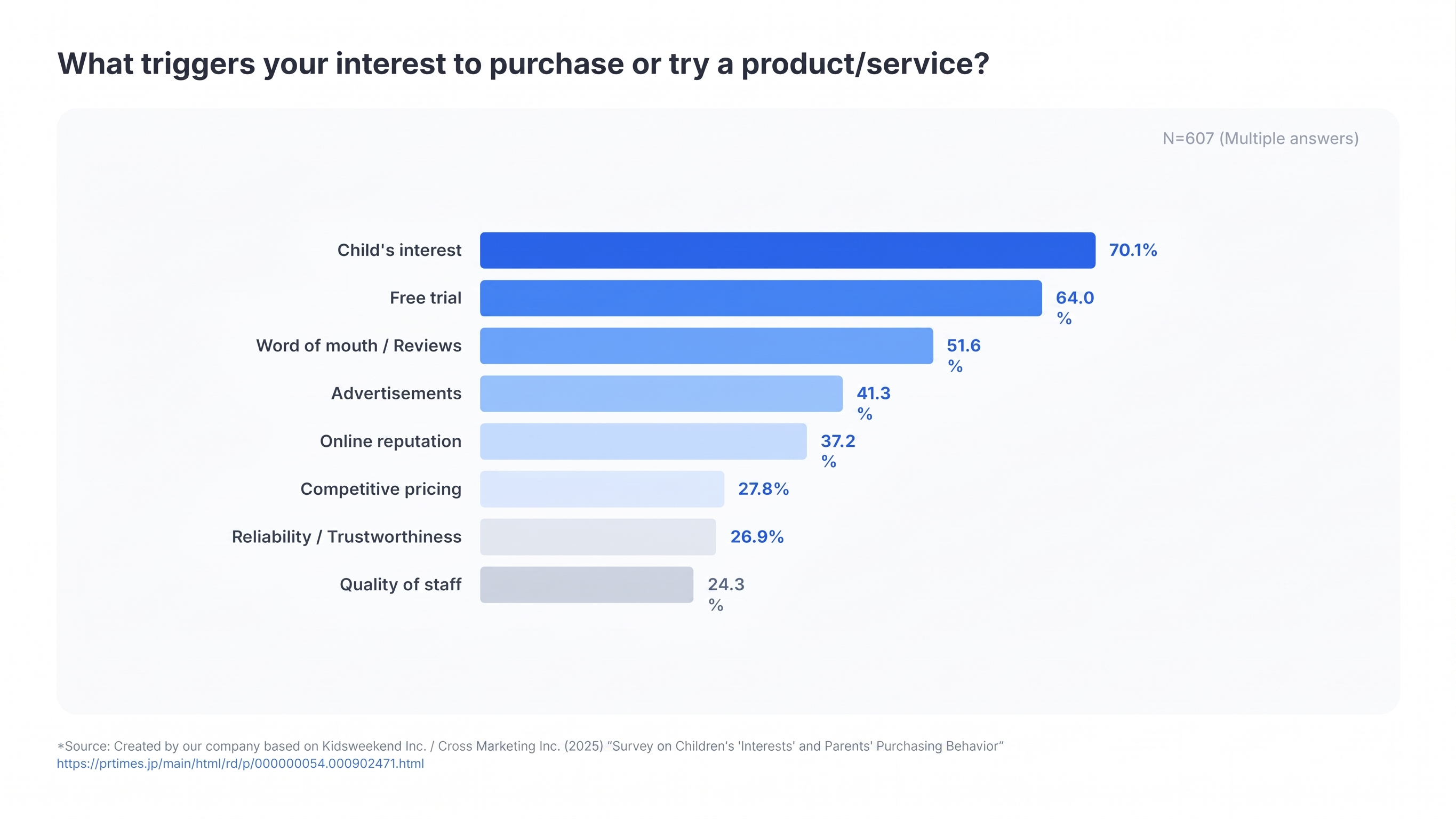
Above all, there is the fact that brand loyalty is formed during one's youth. Building positive connections with specific brands during one's teenage years is a long-term investment that will determine lifetime customer value over the course of decades.
Furthermore, teenagers have always been the ones who shape "culture itself." Trends that emerge among them eventually spread to people in their 20s and 30s, transforming the entire market. How to capture this trend is a constant challenge for marketers.
DOOH reaches "beyond" the audience that TV and digital alone struggle to reach
So, what kinds of approaches might be possible?
While television remains a powerful medium for shaping public perception, real-time viewership among teenagers is declining. In the digital space, each platform is taking a cautious approach from the perspective of protecting minors, making it increasingly difficult to rely solely on traditional, precise targeting methods.
In fact, according to the annual survey on information and communications media usage conducted by the Ministry of Internal Affairs and Communications, while teenagers spend less than one hour (39.7 minutes) watching live television on weekdays, their internet usage averages about four hours (243.4 minutes) on weekdays and reaches more than five hours (316.1 minutes) on weekends. This data highlights the structural reality that a significant portion of their daily lives has shifted to the digital realm, making it increasingly difficult to address this trend through traditional planning approaches that offer only a choice between television and digital media.
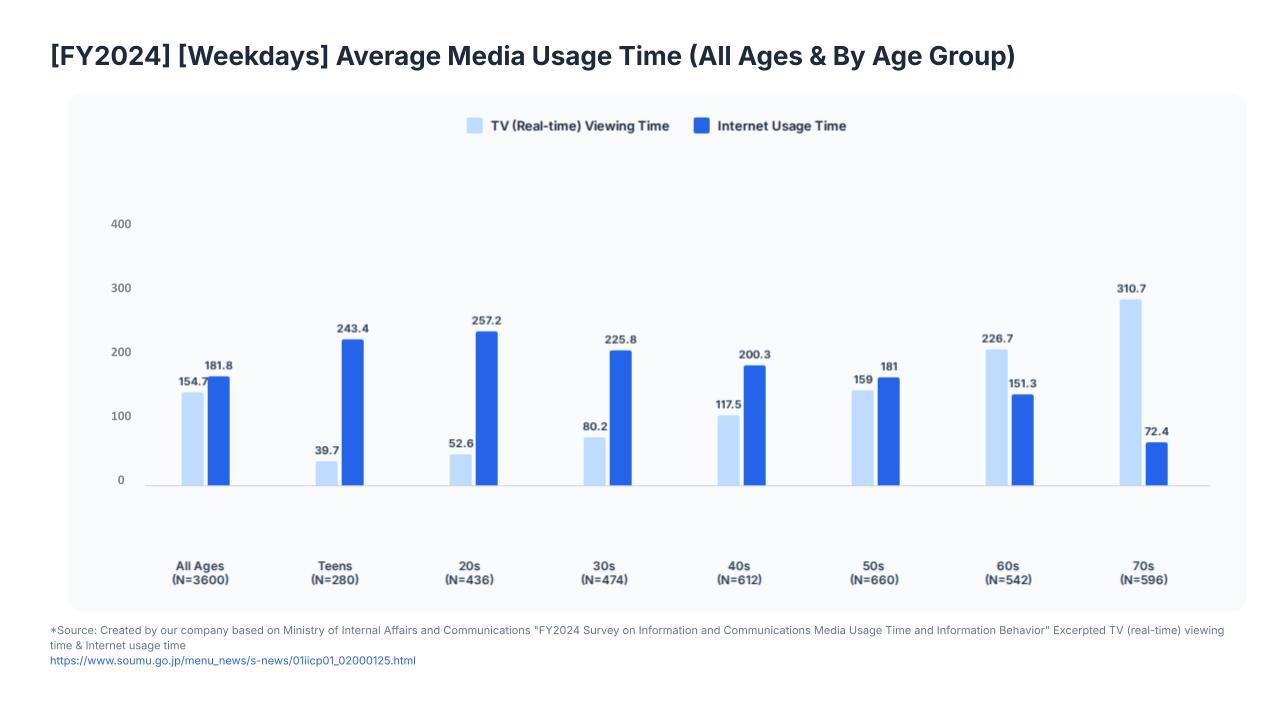
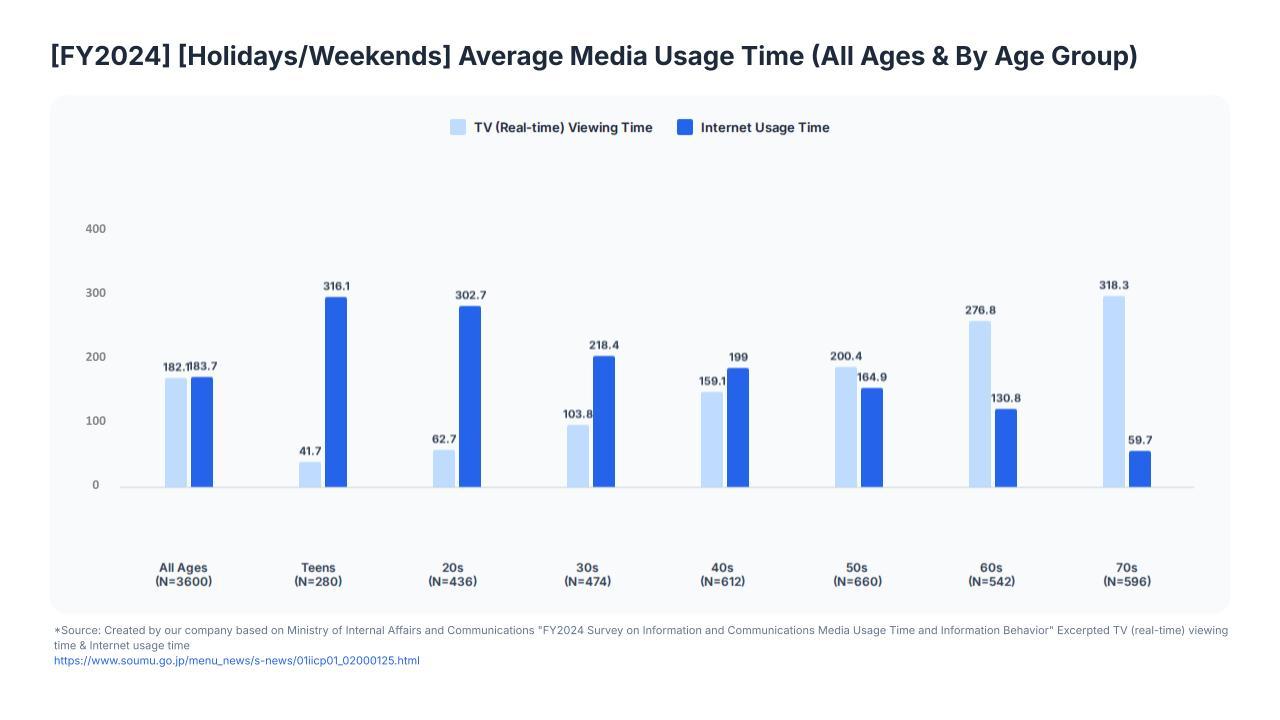
Against this backdrop, DOOH is once again attracting attention as a viable option.
Why DOOH Is Well-Suited for Marketing to Teens
Paradoxically, the strength of DOOH lies in the fact that it "doesn't rely on hyper-precise targeting.
Given that OOH is a medium installed in public spaces, the creative content displayed has undergone advertising reviews designed specifically for public spaces. Furthermore, a key feature is that, unlike digital advertising, it does not track specific individuals. It is precisely this sense of security--unique to DOOH--derived from its "social credibility" and "respect for privacy" that serves as a strength when reaching teenagers.
While many digital ads are precisely targeted based on individual browsing history, LIVE BOARD leverages the big data held by NTT DOCOMO*2 to deliver ads based on collective trends--such as "there are many people like this at this location and during this time of day." Rather than identifying or tracking individuals, it selects screens where teenagers tend to gather--an approach that respects privacy and represents a form of media usage that is more socially acceptable.
The Three Features of LIVE BOARD
① A privacy-first approach that does not rely on cookies or personal tracking
LIVE BOARD's targeting does not involve "tracking specific individuals" using cookies, social media IDs, or similar methods. It is a privacy-conscious reach strategy that identifies "locations and times with high concentrations of teenagers" by analyzing anonymized and aggregated location and behavioral data.
② Unskippable Visibility × Seamless Integration into Daily Life
Advertisements displayed on urban billboards cannot be skipped like digital ads; instead, they naturally enter the viewer's field of vision as part of the everyday scenery, allowing information to be delivered without disrupting the consumer's content experience. The "noise-canceling" mechanism that teenagers have psychologically developed may not function as effectively in outdoor spaces.
③ Identifying Real-World Targets Through "Zero-Order Analysis"
By combining NTT DOCOMO's big data, we can estimate "which demographic groups gather in large numbers in front of which screens and at what times." Rather than identifying specific individuals, we analyze the locations and times where teenagers tend to gather and target them accordingly--this is LIVE BOARD's unique approach.
It is precisely because this "broad targeting"--which captures group trends, so to speak--allows us to reach teenagers while respecting their privacy.
That is both the nature and the advantage of the DOOH solutions provided by LIVE BOARD.
By combining app usage trends with location data, the percentage of teens in the user base has more than doubled
Here are some examples of how teenagers use LIVE BOARD to communicate.
Challenge
We were planning a promotional campaign for teenagers as part of a smartphone marketing initiative. However, given concerns about the declining accuracy of targeting teenagers in digital advertising, we were searching for "media that could truly reach teenagers."
LIVE BOARD's Approach: Visualizing the Target Audience Through "Zero-Level Analysis"
LIVE BOARD utilized a combination of app download data and location data, among other sources.
First, we utilized big data held by NTT DOCOMO to analyze the behavioral trends of users downloading entertainment apps--such as major social media platforms and comic apps--that are popular among teenagers. We identified the locations and time periods where this user demographic spends the most time, and then selected screens within the LIVE BOARD network with a high concentration of these target users to deliver advertisements.
Rather than relying solyly on "geographic targeting," we use data to map out our target audience's daily routines and select the most effective locations and time slots to reach them--this is the unique approach that sets LIVE BOARD apart.
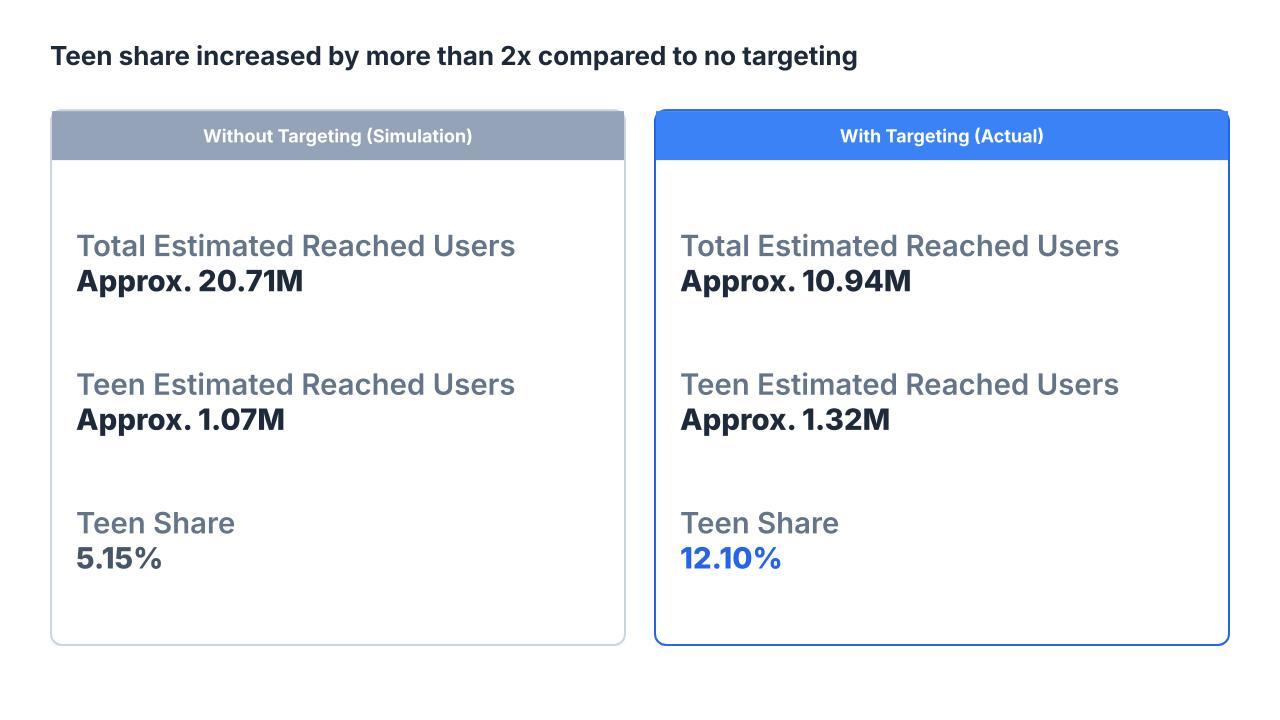
In fact, for this targeted ad campaign, we efficiently narrowed the reach to screens and time slots with a high proportion of the target audience. Although this reduced the total number of ad impressions*3 by about half compared to a non-targeted campaign, it significantly improved the efficiency of reaching teenagers. Compared to a campaign without targeting (simulation values), the proportion of teens increased from 5.15% to 12.10%--a rise of approximately 2.4 times. We achieved ad exposure to a total of approximately 1.32 million teens.
Furthermore, when analyzing the results of the screen penetration rates by area in the form of a ranking, many screens in areas such as Umeda, Shibuya, and Yokohama--which have a high concentration of commercial facilities and are frequently visited by middle and high school students--appeared near the top of the list.
Conclusion: LIVE BOARD Is a "Third Option" That Reaches Teens
As the digital advertising landscape continues to evolve, and with an increasing number of situations where traditional targeting methods alone are insufficient for effectively planning advertising campaigns aimed at teenagers, the results of this study point to significant potential.
LIVE BOARD combines the high visibility unique to public spaces with the ability to precisely select advertising locations by cross-referencing app usage logs and location data. Rather than tracking individuals, this approach identifies the places and times where target users gather, representing a next-generation form of media utilization that balances privacy considerations with advertising effectiveness.
As a "third option" following television and digital media, LIVE BOARD supports your marketing efforts targeting teenagers.
*1 Hakuhodo Inc./TikTok for Business report, "How Brands Can Effectively Utilize Social Media and Short-Form Video to Be Chosen by Consumers" (https://www.hakuhodo.co.jp/news/info/122440/)
*2 Permission for use was obtained from customers in advance, and the data is presented as statistical information that does not identify individual users.
*3 Estimated based on demographic data using the ad exposure rate among users who have granted location permission and are DOCOMO subscribers.
Sources and References
- Hakuhodo Inc./TikTok for Business Report: "How Brands Can Effectively Use Social Media and Short-Form Video to Stand Out" (https://www.hakuhodo.co.jp/news/info/122440/)
- Fiom LLC, "Survey on Gen Z's Perceptions of Immersive Advertising" / Short Drama LAB, "Video Ad Skipping Survey" (https://prtimes.jp/main/html/rd/p/000000068.000104461.html)
- On'yomi Co., Ltd., "Survey on the Purchasing and Consumption Trends of the Alpha Generation" (https://news.mynavi.jp/article/20250520-3328231/)
- Kids Weekend Co., Ltd. / Cross Marketing Co., Ltd. (2025) "Survey on Children's 'Likes' and Parents' Purchasing Behavior" (https://prtimes.jp/main/html/rd/p/000000054.000090247.html)
- Ministry of Internal Affairs and Communications, "Survey on Time Spent Using Information and Communications Media and Information Behavior in Reiwa 6" (https://www.soumu.go.jp/menu_news/s-news/01iicp01_02000125.html)
